Release time: September 15, 2026
Views: 75
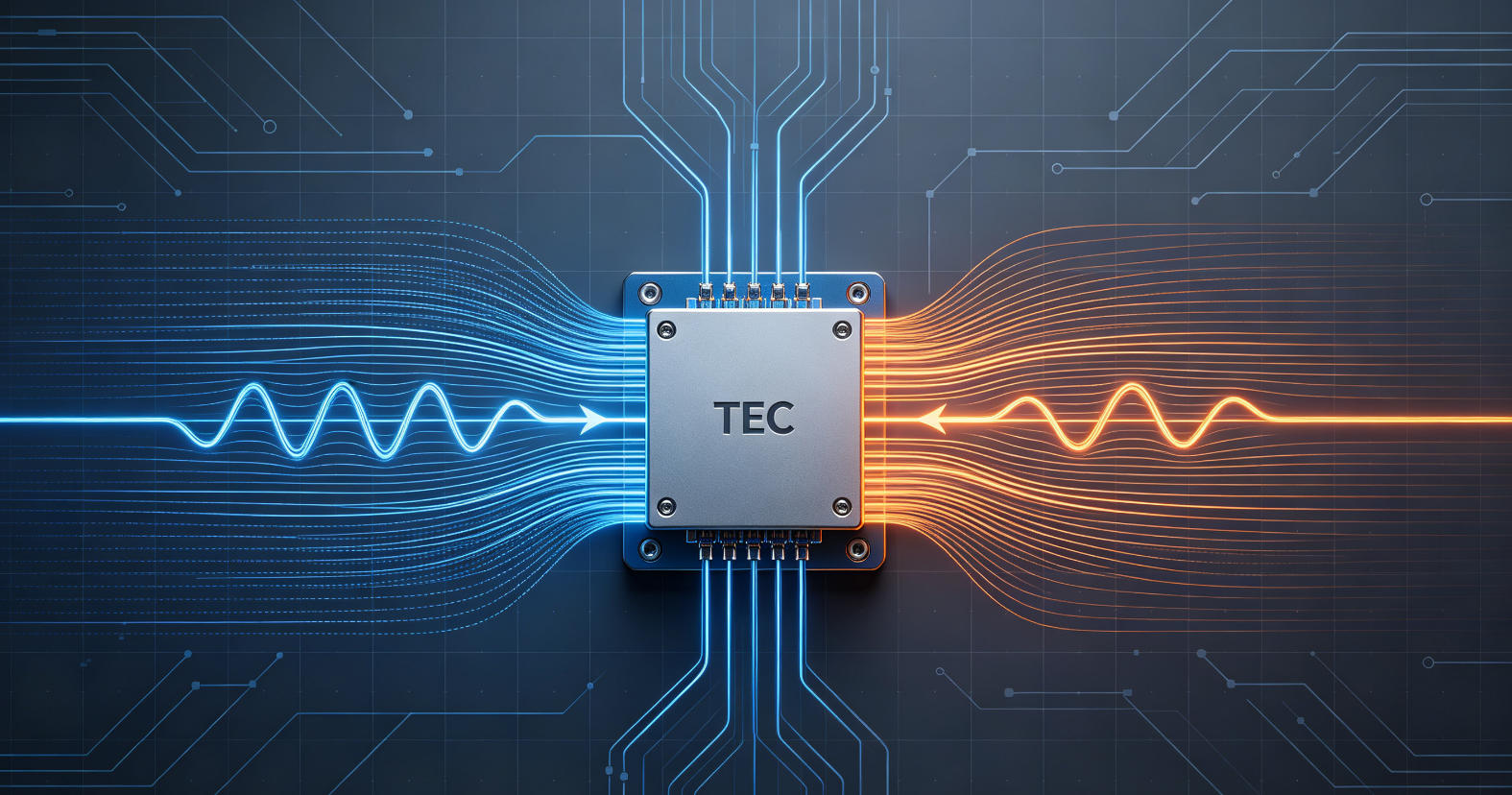
Marketed as “portable air conditioners”, fingernail sized TEC thermoelectric coolers have sparked debate: are they cutting edge technology or consumer gimmicks? Short video platforms are flooded with desktop cooling fans touting “TEC black box technology” and “16°C cool airflow”. Many consumers purchase these products, only to find cool air is limited to a very short range, alongside excessive unit heat buildup and noticeable noise.
This experience has fuelled the narrative that TEC thermoelectric coolers are nothing more than a gimmick. In reality, the technology itself is sound-it is often deployed in misaligned use cases. This article breaks down the genuine value of TEC thermoelectric coolers.
Desktop cooling fans: genuine cooling, heavily overstated performance
Thermoelectric cooling and its cool air output are physically real, yet real world performance is frequently over promoted. These desktop fans centre on TEC thermoelectric coolers: the cold side faces the air duct, while the hot side is fitted with a heat sink and auxiliary fan. The outlet can indeed deliver air below ambient temperature; lab testing can register transient temperatures as low as 16°C.
Two fundamental constraints limit real world performance. First, a TEC unit essentially acts as a heat transporter. Its cooling efficiency hinges entirely on hot side heat dissipation. Poor heat removal leads to rapid temperature rebound on the cold side.
Second, cooled air only remains effective within several tens of centimetres of the outlet and quickly mixes and dissipates into surrounding warm air at greater distances.
Rather than labelling TEC hardware a gimmick, the core issue is scenario mismatch that wastes the technology’s full potential.
TEC’s core strength: ±0.1°C precision temperature control for high end use cases
TEC’s greatest merit is not rapid cooling, but exceptional temperature stability. It delivers temperature control performance better than ±0.1°C; paired with a PID control algorithm module, precision can reach ±0.01°C. By reversing current direction, the same unit can switch instantly between cooling and heating modes.
As solid state components with no moving parts, compressors or refrigerants, TEC thermoelectric coolers operate with low vibration and minimal acoustic noise, offer long operational lifespans, and support straightforward integration — properties that are irreplaceable within high end manufacturing and precision instrument sectors.
Optical communications: where micro TECs act as stability enablers
Driven by surging AI compute demand, data centre optical transceivers are advancing from 400G to 800G and 1.6T. Lasers inside these modules are highly temperature sensitive. A DFB laser exhibits a wavelength drift coefficient of roughly 0.1nm per °C, which can accumulate up to 7nm drift across commercial operating temperature ranges enough to trigger communication outages. Micro TECs can be embedded directly inside optical transceivers to stabilise laser temperature at ±0.1°C and lock output wavelength.
High speed optical communications would not be feasible without such micro TEC components. Several suppliers report year over year growth exceeding 100% for micro TEC deployments in optical communications. These components are already mass produced for 400G and 800G optical transceivers and are being qualified for emerging 1.6T hardware.
The irreplaceable core attributes of TEC thermoelectric coolers
Three characteristics underpin TEC’s unique market position: high precision, proven reliability and broad adaptability. Its ±0.1°C (or tighter) temperature control accuracy is difficult for alternative cooling technologies to match. The solid state, refrigerant free construction supports operation in harsh environments and extends service life.
Additionally, ultra compact form factors (down to 2mm thickness), ease of integration, bidirectional thermal control and fast response make TECs suitable for optical communications, medical devices, aerospace, semiconductor manufacturing and other high end verticals.
Avoid misapplying TEC performance in low end desktop fans
TEC thermoelectric coolers are not consumer gimmicks, but their capability is underutilised in desktop cooling fans. These compact fans only tap a tiny fraction of TEC performance, yet are marketed as revolutionary innovation to attract retail buyers.
In practice, TEC components work behind the scenes to sustain reliable data centre operation, accurate readings from PCR thermal cyclers, and dependable performance for aerospace hardware, delivering value across unseen industrial applications.
Huajing Temperature Control is a key enabler for real world thermoelectric cooling deployments. As a national high-tech enterprise, the firm focuses on thermal management research and TEC development. Its TEC products utilise imported bismuth telluride alloy materials, achieving ±0.1°C temperature-control accuracy and ±0.3°C channel temperature uniformity to satisfy demanding high end requirements.
Backed by an in house R&D team and thermal simulation lab, Huajing Temperature Control delivers customised solutions spanning seven sectors including optical communications, medical technology and new energy systems. Certified to ISO 9001 and IATF 16949 standards, its products are deployed in biological PCR thermal cyclers, high speed optical transceivers and other precision equipment. The company unlocks the full performance of TEC hardware across high end industries and drives industrial upgrading through precision thermal management.
 Contact Our Thermal Experts:
📞 +86 18575222950 (WeChat/WhatApps)
📧 EMAIL: sale02@hj-tc.com
🌐 Browse products: https://www.huajingtc.com (Huajing Cooling Solutions)
Optimize your UAV & Laser & Beauty system's performance with Huajing's advanced thermoelectric cooling technology.


Looking for more
information?

0755 23405284
Email: sale02@hj-tc.com
Add: 3/F No.5 Building,Yesun Pingshan Life and Health Technology Park, No. 19 Linhui Road,Pingshan District, Shenzhen, Guangdong,CN.
©2019- 2024 Huajing Co.,Ltd.Copyright