Release time: December 05, 2025
Views: 718
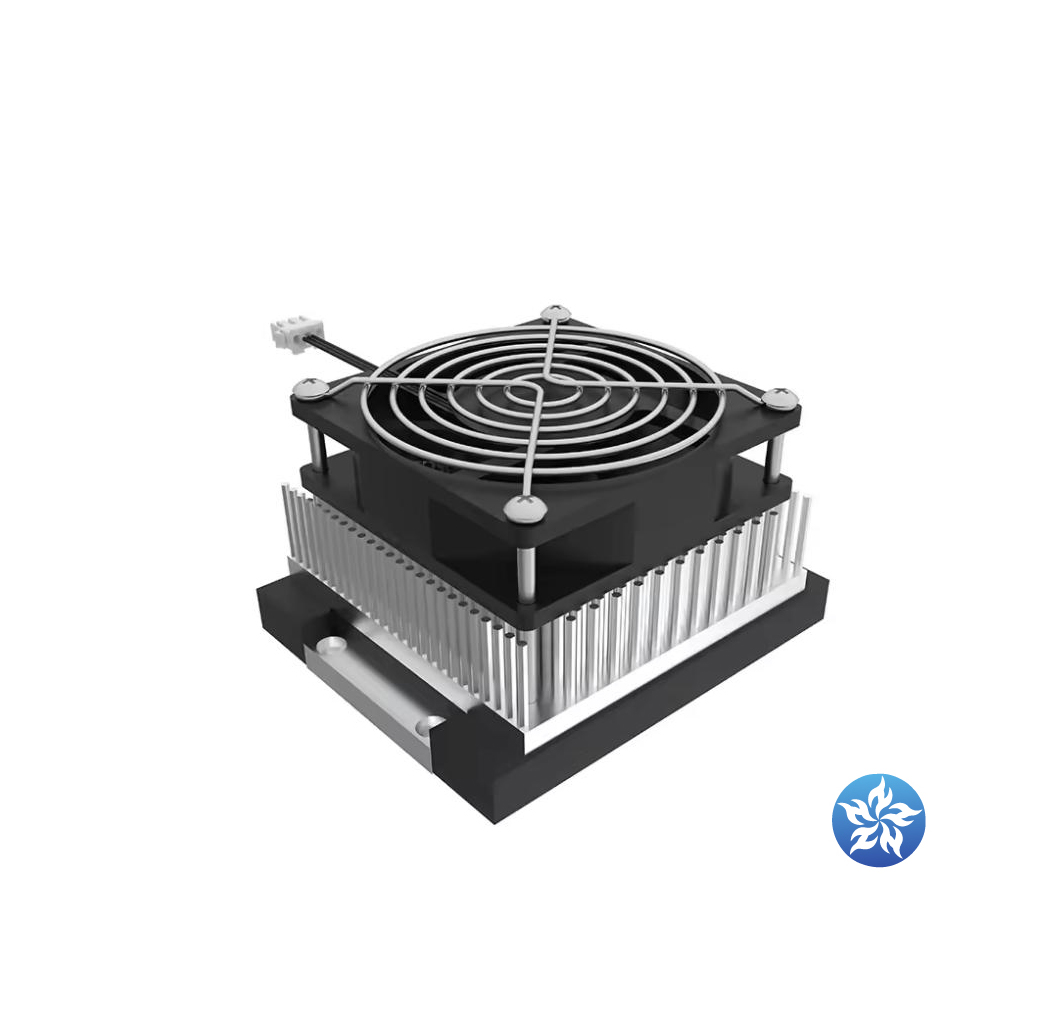
In today's era where smart devices pursue ultimate performance, thermal management and precise temperature control have become critical to a product's success. When standard refrigeration modules fall short due to size, performance, or integration requirements, customized design offers the breakthrough solution. This article explores the complete process of customizing semiconductor refrigeration modules, from requirement alignment to sample delivery.
I. Why Choose Customization? While standard modules are cost-effective and quick to deliver, they often prove inadequate in specific scenarios:
· Space Constraints:Compact internal device layouts requiring uniquely shaped or ultra-thin designs.
· Performance Bottlenecks:Extreme operating conditions (e.g., -40°C low temperatures, high-vibration environments) demanding higher reliability.
· Integration Needs:Requirement for deep coupling with cooling systems, power management, and intelligent control.
Customization, through targeted design, not only breaks through performance limits (e.g., achieving 10-second rapid cooling, noise < 55dB) but also optimizes to eliminate redundancy, achieving over 30% energy efficiency improvement while maintaining controllable costs.
II. Customization Process Overview: Seven Key Steps
1. Requirement Communication – Precisely Defining "What is Needed"
Translates vague customer needs into actionable technical specifications.
Key Parameter List:
Thermal Performance:Target temperature, cooling capacity, temperature control accuracy (e.g., ±0.1°C).
Electrical Requirements:Operating voltage, current range.
Structural Constraints:Installation space, interface type, weight limits.
Environmental Suitability:Temperature/humidity range, vibration conditions, lifespan requirements.
Customers should provide detailed application scenarios (e.g., vibration resistance for vehicle-mounted devices, low noise for medical devices) to prevent design deviations due to information gaps.
2. Solution Evaluation & Design – Simulating and Selecting Components to Verify Feasibility.
Technology Path Selection:Compressor refrigeration, semiconductor refrigeration (TEC), or hybrid solutions.
Thermodynamic Simulation:Calculates cooling capacity, temperature difference, and predicts temperature field distribution.
Material Selection:
Thermoelectric Chips:Bismuth Telluride-based materials (process affects efficiency).
Heat Dissipation Solutions:Air-cooling (lower cost) or liquid-cooling (suited for high power).
Deliverables:3D models, performance curves, and Bill of Materials (BOM).
3. Prototype Fabrication & Testing – Creating the First Sample and Conducting Comprehensive Validation to Avoid Batch Losses.
Testing Content:
§ Performance Verification:Cooling capacity, temperature difference, power consumption.
§ Reliability Testing:High/low temperature cycling, vibration testing, accelerated lifespan testing.
§ Safety Inspection:Insulation, anti-condensation design.
Common Issues & Optimizations:
§ Insufficient Cooling:Adjust thermoelectric array layout or enhance heat dissipation.
§ Large Temperature Fluctuation:Integrate PID algorithm; precision can reach ±0.1°C.
4. Joint Testing & Optimization – Placing the Sample in the Customer's Actual System for Validation and Iteration.
Customer-side testing simulating real-world working conditions.
Data collection: recording temperature control curves, energy consumption, noise levels.
Rapid optimization: adjusting design based on identified issues (e.g., improving airflow, replacing thermal interface materials).
5. Design Optimization & Confirmation – Adjusting the Design Based on Test Data.
Structural optimization, e.g., improving thermal paste application process.
Material substitution, e.g., selecting higher efficiency thermoelectric chips.
Customer sign-off on the optimized sample's performance and appearance.
6. Pilot Production – Validating Production Line Stability and Process Consistency.
Typical scale: 50-100 units.
Key control points: soldering quality, heatsink flatness, sealing integrity.
7. Mass Production & Quality Control Delivery – Translating Custom Technology into Standardized Work Instructions.
Process standardization.
Quality Control:
100% performance testing + sampling for endurance testing.
QC Tools: SPC (Statistical Process Control), AOI (Automated Optical Inspection).
III. Technical Key Points
· Technology Path Selection Basis:
Semiconductor Refrigeration (TEC): Suitable for small/medium cooling loads, precise temperature control (±0.01°C), vibration-sensitive applications.
Compressor Refrigeration: Suitable for large cooling loads, extreme temperature differential environments.
Hybrid Solutions: Balancing energy efficiency and temperature control precision.
IV. How to Choose a Reliable Partner for Custom Semiconductor Refrigeration Modules?
1. Technical Capabilities:Does the partner possess simulation capabilities and a professional laboratory?
2. Experience & Track Record:Do they have successful case studies in similar industries?
3. Quality Systems: Are they ISO-certified? Is raw material control strict?
4. Service Process:Do they offer end-to-end support from design to mass production?
Customizing semiconductor refrigeration modules is a collaborative journey between technology and requirements. A clear process is both the guarantee of project success and the core of controlling risks and costs. When choosing a supplier with full industry chain capabilities and placing high importance on the prototype testing phase, customization ceases to be synonymous with high cost and becomes a precise investment to enhance product competitiveness.
About Us: Huajing Temperature Control possesses extensive design experience and a professional production/assembly process in the field of semiconductor refrigeration.
For years, we have focused on semiconductor refrigeration technology and its application in precision medical equipment like allergen detectors. Throughout the design and manufacturing process, we continuously optimize material selection and improve structure, implementing strict quality control systems and aging test procedures to ensure high product reliability and stability, maintaining excellent cooling performance even after prolonged operation. Our company boasts an R&D team composed of experts in thermal management research and semiconductor refrigeration technology development. Equipped with a high-specification laboratory, our performance testing for temperature control product series meets leading domestic standards.
Our customized temperature control equipment solutions and products are already applied across multiple industries including medical, aesthetics, automotive, communications, testing instruments, and consumer electronics.
 Contact Our Thermal Experts:
📞 +86 18575222950 (WeChat/WhatApps)
📧 EMAIL: sale02@hj-tc.com
🌐 Browse products: https://www.huajingtc.com (Huajing Cooling Solutions)
Optimize your UAV & Laser & Beauty system's performance with Huajing's advanced thermoelectric cooling technology.
Huajing Temperature Control – Your Professional Total Solution Provider for Temperature Control Equipment.


Looking for more
information?

0755 23405284
Email: sale02@hj-tc.com
Add: 3/F No.5 Building,Yesun Pingshan Life and Health Technology Park, No. 19 Linhui Road,Pingshan District, Shenzhen, Guangdong,CN.
©2019- 2024 Huajing Co.,Ltd.Copyright