Release time: July 28, 2026
Views: 229
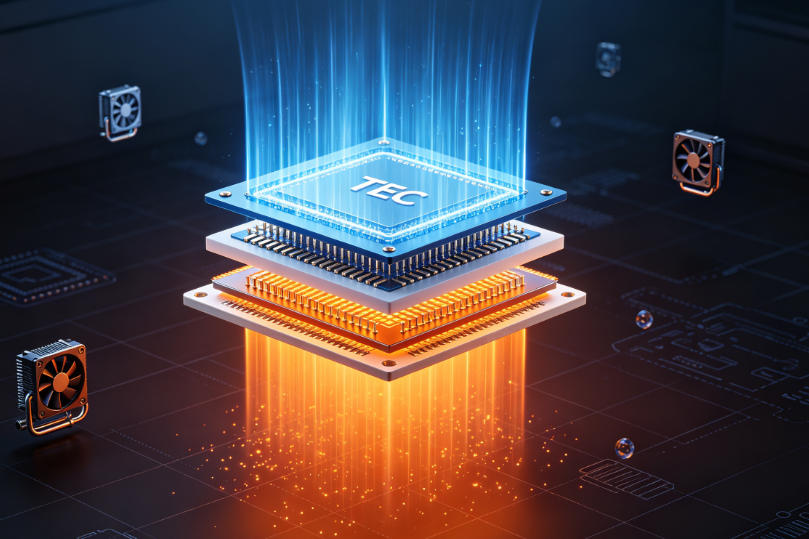
Thermoelectric Coolers (TEC), also known as semiconductor refrigerators, are widely applied in electronic heat dissipation and small-scale refrigeration equipment by virtue of their advantages including no noise, compact size and precise temperature control. However, the market features a wide variety of TEC models with significant performance differences, leaving consumers confused during selection. This guide elaborates on the core parameters, key purchasing considerations, popular model analysis, as well as usage and maintenance tips of thermoelectric coolers, providing practical and impartial guidance to help users select products suitable for their needs.
I. Analysis of Core Parameters of Thermoelectric Coolers
Mastering the core parameters is the foundation of TEC selection. These parameters directly determine the refrigeration performance and application scenarios of the coolers and require key attention from buyers.
Maximum Temperature Difference (△Tmax): It refers to the maximum temperature difference between the hot end and cold end of a thermoelectric cooler under rated operating conditions, measured in ℃. This parameter reflects the ultimate refrigeration capacity of the TEC; a higher value means greater refrigeration potential. For example, a TEC with a maximum temperature difference of 60℃ can lower the temperature of the cold end by 60℃ compared with the hot end under ideal conditions. It should be noted that the actual temperature difference is usually lower than the maximum value due to constraints such as heat dissipation conditions and ambient temperature in practical use.
Cooling Capacity (Qc): Representing the refrigeration capacity of a TEC under specified operating conditions (unit: W), this parameter directly determines the cooling speed and effect, serving as one of the critical indicators for product selection. For heat dissipation of high-power equipment or rapid cooling of a confined space, products with higher cooling capacity are preferred. For small refrigerators, TECs with matching cooling capacity shall be selected according to the refrigerator volume and thermal insulation performance.
Operating Current (I) and Operating Voltage (V): These two parameters define the energy consumption and power supply adaptation requirements of TECs. The operating current and voltage must match the power supply equipment; otherwise, the cooler may fail to work normally or even get damaged. Generally, under the same cooling capacity, high-efficiency TECs feature lower energy consumption and better energy-saving performance.
Size Specifications: The dimensions of TECs (length, width, thickness, etc.) need to fit the installation space. For miniature equipment with limited installation space, selecting a properly sized TEC is essential to avoid installation failure or interference with the normal operation of the equipment after installation.
II. Key Purchasing Considerations for Thermoelectric Coolers
In addition to core parameters, practical factors affecting user experience and product service life need to be taken into account during purchasing.
Clarify Application Scenarios: Different scenarios impose distinct requirements on TECs. For heat dissipation of electronic components such as CPUs and laser modules, priority should be given to cooling capacity and temperature control accuracy. For small refrigerators and vehicle-mounted cooling boxes, besides cooling capacity, continuous operation stability and energy consumption are key concerns. For high-precision fields including medical equipment and scientific research instruments, higher standards are required for temperature control accuracy and operational reliability.
Matching Heat Dissipation Conditions: TECs generate substantial heat at the hot end during operation. Poor heat dissipation will severely weaken the refrigeration effect and even burn out the cooler. Therefore, it is necessary to equip a suitable heat dissipation device (such as heat sink, fan or water cooling system) according to the TEC power during selection. In general, TECs with higher cooling capacity require stronger heat dissipation performance.
Brand and After-Sales Service: Well-known brands guarantee superior production technology and quality control, delivering products with more stable performance. Reliable after-sales service can effectively solve problems encountered during use, including product maintenance and return & exchange services. Buyers can evaluate brands by checking user reviews and after-sales policies.
Price Rationality: TEC prices vary greatly due to differences in brand, performance and size. Users shall select cost-effective products based on actual demands and budgets. It is inadvisable to blindly pursue high-priced products or purchase low-cost inferior goods. Products with excessively low prices often have defects in materials and craftsmanship, leading to compromised refrigeration effect and shortened service life.
II. Analysis of Popular Thermoelectric Cooler Models
To help users intuitively understand the characteristics of different products, several mainstream TEC models on the market are analyzed as follows for reference.
Model A: It features a maximum temperature difference of 55℃, a cooling capacity of 50W, an operating voltage of 12V, an operating current of 4.2A, and dimensions of 40mm×40mm×3.5mm. Boasting a compact size, it is suitable for scenarios with limited installation space, such as heat dissipation for small electronic devices. With moderate cooling capacity, it is ideal for low-power equipment heat dissipation. Most users report stable refrigeration performance and zero noise, while matching with a high-quality fan is required for optimal heat dissipation.
Model B: It has a maximum temperature difference of 60℃, a cooling capacity of 80W, an operating voltage of 24V, an operating current of 3.3A, and dimensions of 50mm×50mm×4mm. Equipped with high cooling capacity, this model is applicable to medium-sized refrigeration equipment such as small refrigerators and constant temperature boxes. Made of premium materials, it offers excellent durability and a well-designed heat dissipation structure, delivering outstanding heat dissipation performance when paired with a heat sink and fan. Its only drawback is the relatively large size, which requires sufficient installation space.
Model C: With a maximum temperature difference of 50℃, a cooling capacity of 30W, an operating voltage of 5V, an operating current of 6A, and dimensions of 30mm×30mm×3mm, this low-voltage TEC supports USB power supply, making it perfect for miniature USB-powered devices such as mini refrigerated boxes and local heat dissipation of electronic components. It features low price and high cost performance, yet its small cooling capacity makes it unsuitable for high-power refrigeration demands. Users praise its excellent portability and convenient operation, while heat dissipation maintenance is required after long-term operation.
It should be noted that the above models are only typical examples. The market offers far more TEC models, and slight performance differences exist among different production batches. Users shall make comprehensive judgments based on actual demands, product parameters and user evaluations.
III. Usage and Maintenance of Thermoelectric Coolers
Standard usage and proper maintenance can extend the service life of TECs and ensure stable refrigeration performance.
Standard Installation: During installation, ensure tight contact between the TEC cold end and the cooled object, and apply thermal grease to enhance thermal conduction. Firmly install the hot end and heat dissipation device to guarantee efficient heat transfer. Meanwhile, avoid applying excessive pressure on the TEC during installation to prevent damage to internal components.
Applicable Operating Environment: TECs shall be operated within the specified temperature range. Avoid using them in high-temperature, high-humidity or corrosive gas environments, which may impair performance and shorten service life. For operation in dusty environments, clean the heat dissipation device regularly to prevent reduced heat dissipation efficiency caused by dust blockage.
Regular Maintenance: Regularly check the operating status of heat dissipation devices, including abnormal fan noise and heat sink blockage. Clean or replace faulty heat dissipation components timely once poor heat dissipation is detected. In addition, inspect the connecting wires regularly to avoid loose connections and ensure stable circuit operation.
In conclusion, the selection of thermoelectric coolers requires comprehensive consideration of core parameters, application scenarios, heat dissipation conditions, brand reputation and after-sales service. The core selection principle is to choose TECs with high energy efficiency ratio and reliable brand reputation on the premise of meeting basic refrigeration requirements (temperature difference and cooling capacity).
 Contact Our Thermal Experts:
📞 +86 18575222950 (WeChat/WhatApps)
📧 EMAIL: sale02@hj-tc.com
🌐 Browse products: https://www.huajingtc.com (Huajing Cooling Solutions)
Optimize your UAV & Laser & Beauty system's performance with Huajing's advanced thermoelectric cooling technology.


Looking for more
information?

0755 23405284
Email: sale02@hj-tc.com
Add: 3/F No.5 Building,Yesun Pingshan Life and Health Technology Park, No. 19 Linhui Road,Pingshan District, Shenzhen, Guangdong,CN.
©2019- 2024 Huajing Co.,Ltd.Copyright